
- English
- Español
- Português
- русский
- Français
- 日本語
- Deutsch
- tiếng Việt
- Italiano
- Nederlands
- ภาษาไทย
- Polski
- 한국어
- Svenska
- magyar
- Malay
- বাংলা ভাষার
- Dansk
- Suomi
- हिन्दी
- Pilipino
- Türkçe
- Gaeilge
- العربية
- Indonesia
- Norsk
- تمل
- český
- ελληνικά
- український
- Javanese
- فارسی
- தமிழ்
- తెలుగు
- नेपाली
- Burmese
- български
- ລາວ
- Latine
- Қазақша
- Euskal
- Azərbaycan
- Slovenský jazyk
- Македонски
- Lietuvos
- Eesti Keel
- Română
- Slovenski
- मराठी
- Srpski језик

Inside FORTRAN Workshop: Edge Banding Lines and Six-Sided Drilling Lines in Full Production — Built for High-Speed Automated Panel Furniture Manufacturing
Inside FORTRAN Workshop: Edge Banding Lines and Six-Sided Drilling Lines in Full Production — Built for High-Speed Automated Panel Furniture Manufacturing
In panel furniture production, two processes stand at the heart of quality and efficiency: edge banding and drilling. Edge banding defines the sealed, finished look of every cabinet edge, while drilling — hole patterns for cam locks, shelf pins, hinges and dowels — determines whether flat-pack panels assemble correctly. As custom furniture orders grow more complex and delivery windows shrink, factories can no longer rely on isolated machines operated one panel at a time. Increasingly, they need complete, linked production lines that run continuously. At FORTRAN, our workshop is currently running full production on two flagship systems: automated edge banding lines and six-sided drilling lines. Here is a closer look at both products and why factories across Europe, Southeast Asia and Latin America are choosing them.
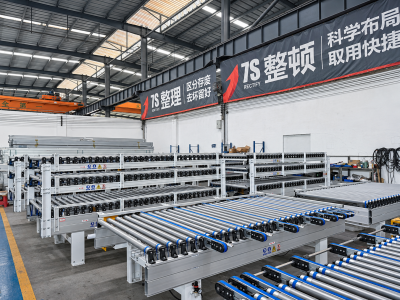
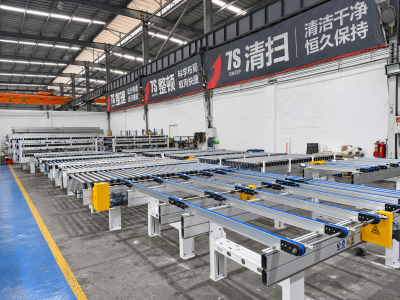
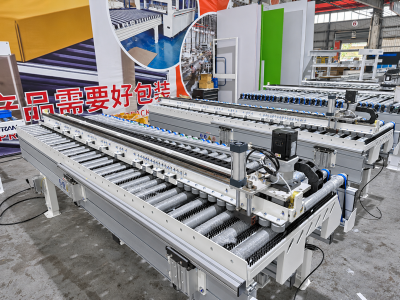
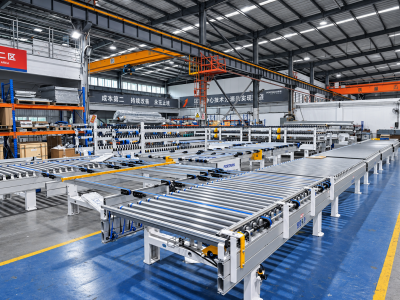
Edge Banding Lines: Continuous, Consistent, Unmanned Edge Sealing
An edge banding line is far more than a single edge bander. It is an integrated flow system that links the edge banding machine with automatic infeed, buffering, turnover and outfeed units, so panels move through the sealing process without repeated manual handling.
Continuous production flow. Panels enter the line automatically from a lift table or conveyor, pass through the edge bander, and are buffered or rotated as required — for example, through 90° or 180° turnover units — before exiting to the next station. Operators no longer stop the machine to feed every board by hand.
Uniform edge quality, batch after batch. Because feed speed, glue application and trimming are controlled automatically and identically for every panel, edge quality stays consistent across whole production batches. Manufacturers no longer face the visible quality variations that come with manual feeding — uneven glue lines, inconsistent trimming, or boards fed at slight angles.
Higher throughput with fewer workers. A well-designed edge banding line lets one operator monitor the whole flow while the machine feeds, seals and discharges panels automatically. Output rises, labor per panel falls, and factories handle peak orders without hiring temporary staff.
Built for mixed production. Quick parameter switching supports different panel thicknesses, edge tape widths and materials — melamine, veneer, ABS and PVC — making the line equally suitable for high-volume standard orders and small-batch custom cabinet production.
Six-Sided Drilling Lines: All Faces, One Setup, Zero Repositioning
Drilling used to be a multi-stage bottleneck. Panels had to be flipped, re-clamped and re-aligned between operations to drill holes on every side. Each repositioning step wasted time and introduced positioning error. The FORTRAN six-sided drilling line eliminates that entirely.
All six faces in one clamping.A single setup drills the top, bottom and all four edges of the panel in one pass. No flipping, no reclamping, no secondary alignment — the panel is machined completely and discharged ready for assembly.
High positioning accuracy. CNC-controlled axes and precision measuring systems position the panel accurately, so hole locations match engineering drawings exactly. Shelf-pin holes, hinge cups, dowel bores and connector holes land where they should — every time. This precision directly reduces assembly problems and on-site fitting complaints.
Faster turnaround for custom cabinets. Modern custom furniture means one-off hole patterns per order. Six-sided drilling handles program changes quickly, loading the next panel with its own drilling data almost instantly. Factories respond to custom orders without the slow changeovers that traditional drilling cells require.
Integrates with the whole production loop. The six-sided drilling line docks naturally with edge banding lines, lifting tables, roller conveyors and sorting systems. Panels flow automatically from cutting to edge banding to drilling to unloading, forming a nearly unmanned processing loop.
Why These Two Lines Work So Well Together
Edge banding and six-sided drilling are complementary stages in the panel workflow. A linked production system that runs both at consistent speed becomes a genuinely efficient line: panels are edge-sealed without scratches, drilled without repositioning, and transferred between processes without manual carrying. FORTRAN designs both product families on the same automation philosophy — standardized interfaces, PLC-coordinated motion and compatibility with upstream loading and downstream sorting equipment — so customers can extend the line module by module as their business grows.
Built in Our Own Workshop, Tested Before Shipment
The four workshop photos accompanying this article show these two lines in active production at our facility. Every edge banding line and six-sided drilling line goes through in-house assembly, electrical wiring and commissioning before factory acceptance testing. Engineers run continuous test cycles, verify drilling accuracy and edge quality, check every sensor and safety interlock, and only then release the equipment for export packing. This in-house control over production and testing is what lets us ship complex automation systems reliably to customers thousands of kilometers away.
Advantages at a Glance
For edge banding lines: unmanned continuous feeding, consistent edge quality, faster throughput, lower labor, quick format changeover, compatibility with turnover and buffer units.
For six-sided drilling lines: all-faces-in-one-setup machining, zero repositioning, CNC precision hole patterns, fast custom-order changeover, easy integration with the rest of the line.
For both: heavy-duty welded frames built for multi-shift operation, intuitive HMI control, compliance with international safety standards, export-grade packing, and full after-sales support including remote commissioning guidance and on-site engineer service when required.
Customized to Your Line Layout
Every factory has a different space, panel size range and production rhythm. FORTRAN customizes line length, number of stations, conveyor type, lifting height and drilling configuration to match actual workshop layouts and order profiles. Whether you are building a new plant or upgrading an existing one, the line can be tailored rather than forcing the workshop to adapt to the machine.
Supporting Customers After Delivery
Shipping a complex line is only the start. FORTRAN provides multilingual documentation, essential spare parts, 24-hour remote technical support, and on-site installation and training for overseas customers. Our goal is not just to deliver equipment, but to help every factory reach stable production quickly and keep it running.
From the workshop floor where these lines are being built today, to production plants across the world, FORTRAN remains focused on one idea: automation should make panel furniture manufacturing faster, more consistent and less dependent on hard manual labor. Edge banding lines and six-sided drilling lines are two of the most important pieces of that picture — and they are ready now, in production, and available for your next project.
If you are planning a new furniture production line or looking to upgrade your edge banding or drilling capacity, contact FORTRAN today for a tailored line proposal and current lead-time information.
Send Inquiry
Related Products