
- English
- Español
- Português
- русский
- Français
- 日本語
- Deutsch
- tiếng Việt
- Italiano
- Nederlands
- ภาษาไทย
- Polski
- 한국어
- Svenska
- magyar
- Malay
- বাংলা ভাষার
- Dansk
- Suomi
- हिन्दी
- Pilipino
- Türkçe
- Gaeilge
- العربية
- Indonesia
- Norsk
- تمل
- český
- ελληνικά
- український
- Javanese
- فارسی
- தமிழ்
- తెలుగు
- नेपाली
- Burmese
- български
- ລາວ
- Latine
- Қазақша
- Euskal
- Azərbaycan
- Slovenský jazyk
- Македонски
- Lietuvos
- Eesti Keel
- Română
- Slovenski
- मराठी
- Srpski језик

Why Is a Belt Turnover Machine Essential for Improving Panel Handling Efficiency
Choosing the right Belt Turnover Machine is essential for manufacturers seeking higher productivity, safer material handling, and improved product quality. Fortran develops advanced belt turnover solutions that help furniture, woodworking, door, cabinet, and panel production lines achieve automatic 180-degree panel flipping with excellent stability, reduced labor costs, and continuous workflow integration.
A Belt Turnover Machine plays a vital role in modern automated production lines by safely rotating workpieces without causing scratches or surface damage. This article explains how belt turnover technology works, its major advantages, common applications, key technical considerations, and how to select the ideal solution for your factory. Whether you operate a furniture manufacturing plant or a panel processing workshop, understanding this equipment can significantly improve operational efficiency and product consistency.
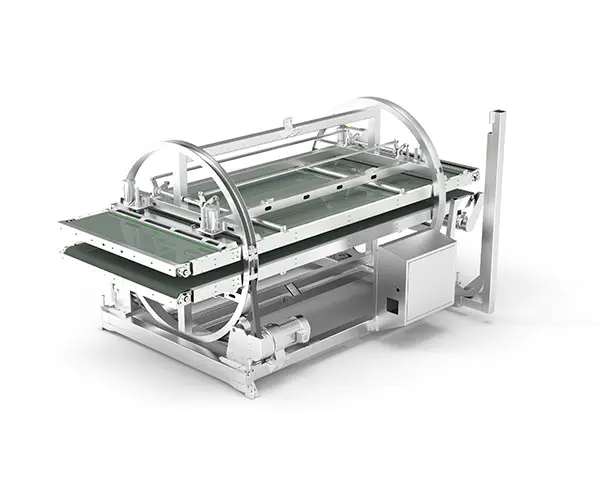
Table of Contents
- What Is a Belt Turnover Machine?
- How Does a Belt Turnover Machine Work?
- Major Benefits of Using a Belt Turnover Machine
- Manual vs. Automatic Belt Turnover
- Typical Industrial Applications
- How to Choose the Right Machine
- Maintenance Tips
- FAQ
What Is a Belt Turnover Machine?
A Belt Turnover Machine is an automated conveying device designed to rotate flat workpieces by 180 degrees while maintaining stable transportation throughout the production process. Instead of relying on manual lifting or mechanical clamping, the machine utilizes synchronized conveyor belts to smoothly flip materials, minimizing vibration and protecting delicate surfaces.
This equipment is widely used in intelligent furniture manufacturing, woodworking factories, door production lines, cabinet assembly, decorative panel processing, and other automated manufacturing environments where both sides of a workpiece require machining, inspection, coating, or packaging.
Compared with traditional manual handling, automated turnover equipment delivers greater precision, repeatability, and production continuity while significantly reducing labor intensity and workplace safety risks.
How Does a Belt Turnover Machine Work?
The operating principle is both simple and highly efficient. As a workpiece enters the machine through the conveyor system, synchronized belts securely support the panel from both sides. A controlled rotation mechanism gradually flips the workpiece 180 degrees while maintaining continuous forward movement.
Modern systems employ servo motors, precision sensors, and programmable control systems to ensure smooth motion throughout the turnover cycle. This synchronized movement minimizes impact forces that could otherwise damage finished surfaces.
The standard working process includes:
- Automatic panel feeding.
- Position detection by sensors.
- Synchronized belt gripping.
- Stable 180° turnover.
- Continuous conveyor output.
- Transfer to the next processing station.
Because the entire process is automated, manufacturers achieve consistent quality regardless of production volume or operator experience.
Major Benefits of Using a Belt Turnover Machine
1. Improved Production Efficiency
Automated turnover eliminates unnecessary manual operations, allowing production lines to operate continuously with minimal interruption. Faster handling directly contributes to higher daily output.
2. Superior Surface Protection
Soft conveyor belts evenly distribute pressure across the workpiece, helping prevent scratches, dents, or deformation during flipping. This is especially valuable when processing laminated panels, painted boards, and decorative materials.
3. Reduced Labor Costs
Manual flipping often requires multiple operators, particularly for large or heavy panels. Automated equipment allows one operator to supervise several production stages simultaneously.
4. Increased Workplace Safety
Heavy panels pose ergonomic risks when handled manually. Automated turnover greatly reduces lifting injuries while creating a safer working environment.
5. Easy Integration
A Belt Turnover Machine can be integrated into existing conveyor systems, CNC production lines, edge banding lines, drilling lines, sanding equipment, and packaging systems with minimal modification.
Manual vs. Automatic Belt Turnover
| Feature | Manual Handling | Belt Turnover Machine |
|---|---|---|
| Production Speed | Slow | High |
| Labor Requirement | Multiple operators | Minimal supervision |
| Surface Protection | Operator dependent | Consistent protection |
| Safety | Higher injury risk | Improved operational safety |
| Automation Level | Very low | Fully automated |
| Production Consistency | Variable | Highly consistent |
| Long-Term Cost | Higher labor expenses | Lower operating cost |
Typical Industrial Applications
The versatility of Belt Turnover Machines makes them suitable for a wide range of manufacturing industries.
- Furniture production lines
- Kitchen cabinet manufacturing
- Wardrobe panel processing
- Wood door production
- Decorative board manufacturing
- MDF and plywood processing
- Particle board production
- Laminated panel assembly
- Packaging automation systems
- Smart factory conveyor solutions
In furniture manufacturing, turnover equipment enables both sides of a panel to undergo drilling, routing, sanding, painting, or quality inspection without manual intervention, greatly improving workflow efficiency.
How to Choose the Right Belt Turnover Machine
Selecting the appropriate equipment requires evaluating both current production needs and future expansion plans. A properly matched system ensures long-term performance while minimizing downtime and maintenance costs.
Key selection factors include:
- Maximum panel dimensions
- Weight capacity
- Conveyor speed
- Automation compatibility
- Servo control accuracy
- Machine frame stability
- Safety protection systems
- Maintenance accessibility
- Available installation space
- After-sales technical support
An experienced manufacturer can also customize conveyor width, working height, belt material, and control configuration according to specific production requirements.
```html
Maintenance Tips for Long-Term Performance
Routine maintenance is essential to keep a Belt Turnover Machine operating efficiently and to maximize its service life. A preventive maintenance schedule not only reduces unexpected downtime but also ensures stable production quality throughout daily operations.
Recommended maintenance practices include:
- Inspect conveyor belts regularly for wear, tension, or damage.
- Keep rollers, guide rails, and transmission components clean and free from dust.
- Lubricate bearings and moving parts according to the manufacturer's recommendations.
- Check servo motors, sensors, and electrical connections periodically.
- Verify that emergency stop devices and safety guards are functioning properly.
- Calibrate the control system when production specifications change.
- Replace worn components promptly to avoid affecting overall production efficiency.
By following a scheduled maintenance plan, manufacturers can reduce repair costs, improve operational reliability, and extend equipment lifespan.
Why Choose Fortran Belt Turnover Machines?
With years of experience in intelligent panel handling equipment, Fortran is committed to delivering reliable automation solutions for modern manufacturing facilities. Every Belt Turnover Machine is designed with durability, precision, and production efficiency in mind.
Fortran focuses on integrating advanced automation technologies with practical manufacturing requirements. From equipment design and precision manufacturing to installation support and after-sales service, every stage is carefully managed to help customers improve productivity while lowering operating costs.
Key advantages of choosing Fortran include:
- Stable and durable machine structure.
- High-quality conveyor belt system for smooth turnover.
- Accurate servo-controlled flipping motion.
- Easy integration with automated production lines.
- Custom solutions for different panel sizes and production capacities.
- Professional technical consultation and responsive after-sales support.
- Reliable quality control throughout manufacturing.
Whether you are upgrading an existing production line or building a new smart factory, Fortran provides tailored solutions that meet diverse manufacturing requirements.
Future Development Trends in Automated Panel Handling
As Industry 4.0 continues to reshape manufacturing, automation equipment such as the Belt Turnover Machine will play an increasingly important role in improving production flexibility and operational intelligence.
Future developments are expected to include:
- AI-assisted production monitoring.
- Predictive maintenance using real-time equipment data.
- Remote diagnostics and cloud-based system management.
- Energy-efficient drive systems.
- Greater compatibility with robotic handling systems.
- Fully integrated smart factory control platforms.
These innovations will help manufacturers achieve higher productivity, lower operating costs, and more sustainable production processes.
Conclusion
A Belt Turnover Machine has become an indispensable component of modern automated manufacturing. By replacing manual panel flipping with a precise and reliable conveyor-based turnover process, manufacturers can significantly improve production efficiency, protect product surfaces, reduce labor costs, and create a safer working environment.
When selecting equipment, it is important to consider production capacity, workpiece dimensions, automation compatibility, maintenance requirements, and long-term reliability. Investing in a high-quality turnover solution can provide lasting operational benefits and support continuous business growth.
Frequently Asked Questions (FAQ)
1. What materials can a Belt Turnover Machine handle?
Most machines are suitable for MDF, plywood, particle board, solid wood panels, laminated boards, cabinet components, doors, and other flat workpieces used in woodworking and furniture manufacturing.
2. Can the machine be integrated into an existing production line?
Yes. Most Belt Turnover Machines are designed to integrate seamlessly with conveyors, edge banding machines, CNC routers, drilling centers, sanding machines, and packaging systems.
3. Does the turnover process damage finished surfaces?
No. High-quality conveyor belts and synchronized motion help protect delicate surfaces by minimizing vibration and evenly distributing pressure during the turnover process.
4. Is customization available?
Yes. Manufacturers such as Fortran can customize conveyor width, working height, load capacity, control systems, and other specifications according to specific production requirements.
5. How often should maintenance be performed?
Routine inspections should be carried out daily, while lubrication, calibration, and comprehensive maintenance should follow the manufacturer's recommended maintenance schedule to ensure optimal performance.
Ready to Improve Your Production Efficiency?
If you are looking for a reliable, efficient, and fully automated Belt Turnover Machine, Fortran offers professional solutions designed to meet the needs of modern furniture and panel manufacturing. Our experienced team can help you select the ideal equipment, customize automation solutions, and provide comprehensive technical support throughout your project. Contact us today to discuss your production requirements and discover how Fortran can help you build a smarter, safer, and more efficient manufacturing line.