
- English
- Español
- Português
- русский
- Français
- 日本語
- Deutsch
- tiếng Việt
- Italiano
- Nederlands
- ภาษาไทย
- Polski
- 한국어
- Svenska
- magyar
- Malay
- বাংলা ভাষার
- Dansk
- Suomi
- हिन्दी
- Pilipino
- Türkçe
- Gaeilge
- العربية
- Indonesia
- Norsk
- تمل
- český
- ελληνικά
- український
- Javanese
- فارسی
- தமிழ்
- తెలుగు
- नेपाली
- Burmese
- български
- ລາວ
- Latine
- Қазақша
- Euskal
- Azərbaycan
- Slovenský jazyk
- Македонски
- Lietuvos
- Eesti Keel
- Română
- Slovenski
- मराठी
- Srpski језик

How Can a Belt Turnover Machine Revolutionize Material Handling Efficiency in Modern Manufacturing
In today's rapidly evolving manufacturing industry, automation solutions have become essential for improving productivity and reducing manual operations. Fortran provides advanced industrial automation equipment, and its Belt Turnover Machine is designed to achieve efficient 180° material flipping during continuous conveying processes. This intelligent equipment helps furniture manufacturers, logistics companies, and industrial production lines optimize workflow, improve safety, and maintain stable production performance.
A Belt Turnover Machine is a specialized automation device that enables precise flipping of panels, boards, coils, and packaged products during transportation. By integrating a conveyor system with a mechanical turnover structure, it eliminates traditional manual turning operations and supports high-efficiency automated production. This article explains the working principle, advantages, technical specifications, applications, and purchasing considerations of Belt Turnover Machine solutions to help manufacturers understand how this equipment improves modern production lines.
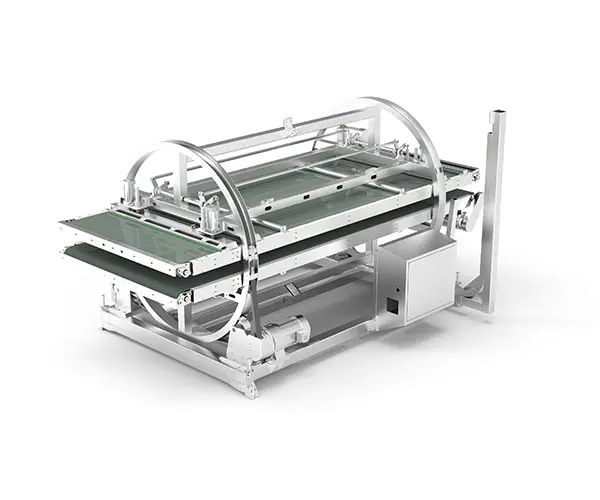
Table of Contents
- What Is a Belt Turnover Machine?
- How Does a Belt Turnover Machine Work?
- Key Advantages of Using a Belt Turnover Machine
- Technical Specifications and Performance Parameters
- Industrial Applications of Belt Turnover Machine
- How to Choose the Right Belt Turnover Machine?
- Frequently Asked Questions
- Conclusion
What Is a Belt Turnover Machine?
A Belt Turnover Machine is an automated material handling system specially developed for flipping workpieces during transportation. Unlike traditional manual turning methods, this machine uses a coordinated conveyor belt mechanism and mechanical turnover structure to rotate materials accurately, usually achieving a 180-degree flipping operation.
The equipment is widely used in industries where material orientation needs to be changed before further processing, inspection, packaging, or assembly. Common materials handled include wooden panels, furniture boards, plates, coils, and boxed products.
According to industrial requirements, a modern Belt Turnover Machine focuses on three core functions:
- Automatic material flipping: Reduces manual labor and improves production speed.
- Precise positioning: Ensures materials maintain stable alignment after turnover.
- Production line integration: Works smoothly with conveyors and automated manufacturing systems.
How Does a Belt Turnover Machine Work?
The working process of a Belt Turnover Machine combines conveyor transportation, mechanical rotation, and intelligent control technology. When materials enter the turnover area, the conveyor system positions the workpiece accurately. The mechanical turnover mechanism then rotates the material according to preset parameters before transferring it to the next production stage.
The typical operation process includes:
- Material feeding: The workpiece moves into the machine through the conveyor system.
- Automatic detection: Sensors identify the material position and confirm turnover requirements.
- Mechanical flipping: The turnover structure rotates the product smoothly to the required angle.
- Continuous conveying: The flipped material continues toward the next processing station.
This automated process minimizes human intervention and improves production consistency, especially in large-scale manufacturing environments.
Key Advantages of Using a Belt Turnover Machine
For manufacturers seeking higher productivity and intelligent factory upgrades, investing in a Belt Turnover Machine brings significant operational benefits.
1. Higher Production Efficiency
Manual material flipping requires additional workers and consumes valuable production time. The automated turnover process allows continuous operation and helps factories increase throughput without increasing labor costs.
2. Improved Workplace Safety
Heavy or large panels can be difficult and dangerous to turn manually. The machine reduces direct worker involvement, lowering the risk of injuries caused by improper handling.
3. Stable and Accurate Turning Performance
The mechanical structure ensures consistent flipping angles and stable positioning. This is especially important for industries requiring precise surface inspection, coating, printing, or assembly processes.
4. Flexible Production Compatibility
A high-quality Belt Turnover Machine can adapt to different material sizes and production requirements. Parameters such as workpiece length, width, thickness, and turnover speed can be adjusted according to application needs.
Technical Specifications and Performance Parameters
Selecting equipment with suitable specifications is essential for ensuring smooth production operation. The following table presents typical performance parameters of a Belt Turnover Machine:
| Parameter | Specification |
|---|---|
| Workpiece Length | 250-2750 mm |
| Workpiece Width | 250-1220 mm |
| Workpiece Thickness | 10-60 mm |
| Maximum Workpiece Weight | Up to 100 kg |
| Reverse Speed | 3-4 times/min |
| Working Air Pressure | 0.4-0.6 MPa |
These specifications allow the equipment to support various industrial applications, especially automated furniture production and panel processing lines.
Industrial Applications of Belt Turnover Machine
With the continuous development of intelligent manufacturing, the demand for automated material handling equipment has increased significantly. A Belt Turnover Machine plays an important role in multiple industries by improving production efficiency and reducing repetitive manual operations.
1. Furniture Manufacturing Industry
The furniture manufacturing industry is one of the most common application fields for Belt Turnover Machine systems. During the production of cabinets, doors, tables, and wooden panels, materials often need to be flipped for sanding, painting, drilling, edge processing, or quality inspection.
By integrating a turnover machine into automated production lines, furniture factories can achieve continuous panel handling while maintaining accurate positioning and reducing surface damage caused by manual handling.
2. Wood Processing and Panel Production
In wood processing factories, large panels are usually heavy and difficult to rotate manually. A Belt Turnover Machine provides a safer and more efficient solution for turning MDF boards, plywood, particle boards, and other sheet materials.
- Supports high-frequency production operations.
- Reduces material handling time between processes.
- Improves consistency during automated manufacturing.
- Protects product surfaces from scratches and impact.
3. Logistics and Packaging Industry
Modern logistics centers often require products to change orientation before labeling, scanning, packaging, or palletizing. Automated turnover equipment helps streamline these processes and improves the efficiency of intelligent warehouse systems.
4. Industrial Assembly Lines
In automobile parts manufacturing, electronic equipment assembly, and other industrial production environments, materials may require different orientations during processing. A Belt Turnover Machine enables smooth integration with robotic systems, conveyors, and automated inspection equipment.
How to Choose the Right Belt Turnover Machine?
Choosing a suitable Belt Turnover Machine requires a comprehensive evaluation of production requirements, material characteristics, and automation goals. A reliable selection process can help businesses achieve better long-term performance.
1. Analyze Material Characteristics
Before purchasing, manufacturers should evaluate the size, weight, thickness, and surface requirements of the materials being handled. Different workpieces require different conveyor structures and turnover designs.
2. Consider Production Capacity
The machine's turnover speed should match the production line output. For high-volume manufacturing facilities, selecting equipment with stable continuous operation capability is essential.
3. Evaluate Automation Compatibility
A modern Belt Turnover Machine should be compatible with existing production systems, including conveyors, CNC equipment, robotic arms, and intelligent control platforms.
4. Choose a Professional Manufacturer
Working with an experienced manufacturer ensures better equipment reliability, technical support, and customization capability. Professional suppliers usually provide complete solutions including machine design, installation guidance, and after-sales service.
| Selection Factor | Why It Matters |
|---|---|
| Material Size | Determines machine structure and turnover capacity. |
| Production Speed | Ensures the machine matches factory output requirements. |
| Automation Level | Improves integration with smart manufacturing systems. |
| After-Sales Support | Reduces downtime and improves equipment lifespan. |
Future Development Trends of Belt Turnover Machine
As factories continue moving toward Industry 4.0, Belt Turnover Machine technology is also developing toward higher intelligence, flexibility, and efficiency.
Future equipment trends may include:
- Smart sensor integration: Real-time monitoring of material position and machine operation status.
- AI-based control systems: Automatic adjustment of operating parameters according to production conditions.
- Energy-efficient design: Lower power consumption with optimized mechanical structures.
- Modular customization: Flexible solutions for different production environments.
These innovations will help manufacturers build more efficient and sustainable automated production systems.
Frequently Asked Questions
Q1: What materials can a Belt Turnover Machine handle?
A Belt Turnover Machine can handle various flat and structured materials, including wooden panels, furniture boards, packaging products, industrial plates, and other materials requiring automatic orientation changes. The exact application depends on machine configuration and production requirements.
Q2: What is the main advantage of using a Belt Turnover Machine instead of manual turning?
The main advantage is improved efficiency and safety. Automated turnover reduces labor requirements, prevents worker injuries caused by handling heavy materials, and ensures consistent turning accuracy throughout production.
Q3: Can a Belt Turnover Machine be customized for different production lines?
Yes. Professional manufacturers can customize machine dimensions, conveyor systems, turnover capacity, and control functions according to specific production requirements, material sizes, and factory layouts.
Q4: How can a Belt Turnover Machine improve factory productivity?
By automating repetitive flipping operations, the machine reduces processing delays between production stages. It allows continuous workflow, improves product positioning accuracy, and helps factories achieve higher overall production efficiency.
Q5: What should customers consider before purchasing this equipment?
Customers should consider material specifications, production speed, automation compatibility, equipment reliability, and supplier technical support. Choosing an experienced manufacturer can ensure better performance and long-term operational benefits.
Conclusion
A Belt Turnover Machine is an essential automation solution for manufacturers aiming to improve material handling efficiency, production safety, and workflow consistency. By replacing manual turnover operations with precise mechanical automation, this equipment helps industries achieve faster production cycles and better product quality.
Fortran continues to focus on providing reliable industrial automation solutions designed for modern manufacturing requirements. With professional engineering capabilities and customized equipment options, businesses can optimize their production processes and build more efficient automated factories. If you are looking for a suitable Belt Turnover Machine solution for your production line, please contact us to discuss your specific requirements and receive professional technical support.