
- English
- Español
- Português
- русский
- Français
- 日本語
- Deutsch
- tiếng Việt
- Italiano
- Nederlands
- ภาษาไทย
- Polski
- 한국어
- Svenska
- magyar
- Malay
- বাংলা ভাষার
- Dansk
- Suomi
- हिन्दी
- Pilipino
- Türkçe
- Gaeilge
- العربية
- Indonesia
- Norsk
- تمل
- český
- ελληνικά
- український
- Javanese
- فارسی
- தமிழ்
- తెలుగు
- नेपाली
- Burmese
- български
- ລາວ
- Latine
- Қазақша
- Euskal
- Azərbaycan
- Slovenský jazyk
- Македонски
- Lietuvos
- Eesti Keel
- Română
- Slovenski
- मराठी
- Srpski језик

What Are the Key Benefits of Using a Scissor Hydraulic Lifting Table Series
As someone who has spent two decades navigating the complexities of industrial operations and efficiency solutions, I’ve seen countless pieces of equipment come and go. But few have consistently delivered transformative value like a well-engineered Scissor Type Hydraulic Lifting Table Series. Whether in a bustling warehouse, a precise assembly line, or a dynamic workshop, the right lifting solution isn’t just a purchase—it’s a strategic investment in safety, productivity, and ergonomics. Having worked closely with engineering and operations teams, I understand the pain points: worker fatigue, inconsistent workflow, and the safety hazards of manual handling. Today, I want to break down why the FORTRAN Scissor Type Hydraulic Lifting Table Series stands out as a definitive solution to these widespread challenges.

Why Should You Consider the Engineering Behind a Scissor Type Hydraulic Lifting Table Series
The core of any reliable equipment lies in its fundamental engineering. A Scissor Type Hydraulic Lifting Table Series utilizes a linked, folding support mechanism—the scissor legs—powered by a hydraulic cylinder. This design is celebrated for its exceptional stability and capacity to handle substantial vertical loads with a relatively compact footprint. Unlike makeshift solutions or less stable alternatives, the scissor mechanism ensures the platform remains level and secure throughout its travel, which is paramount when handling delicate or expensive materials.
The hydraulic system offers smooth, controlled, and powerful movement. For operators, this translates to precise height positioning without jarring stops or starts. From my experience, this control is critical. It minimizes product damage, reduces operator stress, and integrates seamlessly into repetitive tasks. The FORTRAN series takes this further by incorporating precision-machined pivot points and high-grade hydraulic oil with advanced sealing technology, ensuring longevity and minimal maintenance even in demanding shift cycles.
What Are the Critical Parameters That Define a High-Performance Lifting Table
When evaluating a Scissor Type Hydraulic Lifting Table Series, it’s not enough to just know it "lifts things." You need to scrutinize the specifications that dictate its real-world performance. Here are the key parameters presented in a clear, list-based format for professional assessment:
-
Load Capacity: The maximum safe weight the table can lift. Underspecifying here is a major safety risk.
-
Platform Size & Design: Dimensions (length x width) and surface type (e.g., skid-resistant, turntable, conveyor-ready) must match your specific load footprint.
-
Lift Height Range: The distance between the lowered and fully elevated positions. Consider both the working height needed and the lowered height for easy loading.
-
Travel Speed: The rate at which the platform ascends and descends, impacting cycle times.
-
Power Source & Motor: Options include electric/hydraulic, air/hydraulic, or standard AC power, depending on your facility's environment (e.g., clean rooms vs. rugged floors).
-
Control System: Location of controls (platform-mounted, remote pendant) and available features like emergency stop, auto-dual lowering, and safety locks.
To provide a clearer comparison, let’s examine two typical models in the FORTRAN portfolio. This table illustrates how specifications align with different operational needs.
Table 1: FORTRAN Scissor Lift Series - Model Comparison for Common Tasks
| Key Parameter | Model FT-SL2000 (Standard Duty) | Model FT-SL5000 (Heavy Duty) | Ideal Application Scenario |
|---|---|---|---|
| Load Capacity | 2,000 lbs | 5,000 lbs | Palletizing vs. Heavy Machinery Handling |
| Platform Size | 48" x 36" | 72" x 48" | Component Kitting vs. Large Assembly |
| Max Lift Height | 60 inches | 72 inches | Workbench Feeding vs. Truck Loading |
| Lowered Height | 8 inches | 10 inches | Low-clearance Workshop Areas |
| Power Source | 110V Single-Phase Electric | 220V Three-Phase Electric | Light Industrial vs. Continuous Production |
How Does the FORTRAN Scissor Type Hydraulic Lifting Table Series Solve Real Worker Pain Points
Let me speak directly to the frustrations I’ve heard from floor managers and workers alike. "My team is exhausted from bending over all day." "The flow between stations is inconsistent." "We’ve had too many close calls with strained backs." This is where the FORTRAN Scissor Type Hydraulic Lifting Table Series transitions from being a machine to being a partner in operational excellence.
First, it directly attacks ergonomic hazards. By bringing the work to the worker at an optimal height, it eliminates constant bending and stooping. This isn’t just about comfort; it’s about reducing absenteeism due to musculoskeletal disorders and retaining skilled labor. Second, it creates a predictable, rhythmic workflow. In assembly tasks, for example, a Scissor Type Hydraulic Lifting Table Series can be positioned to present components exactly where needed, shaving seconds off each cycle that compound into hours of saved time weekly. The inherent stability of the scissor design means workers can apply force (e.g., during pressing or assembly) without worrying about the platform shifting—a common worry with less robust equipment.
What Advanced Features and Customizations Are Available
Beyond standard models, a top-tier Scissor Type Hydraulic Lifting Table Series offers features that solve niche but critical problems. FORTRAN’s engineering allows for extensive customization to fit your process like a glove. Consider features like:
-
Portable or Fixed Bases: For flexible repositioning or permanent, bolt-down stability.
-
Special Platform Surfaces: Non-sparkling stainless steel for chemical environments, or heavy-duty diamond plate for traction.
-
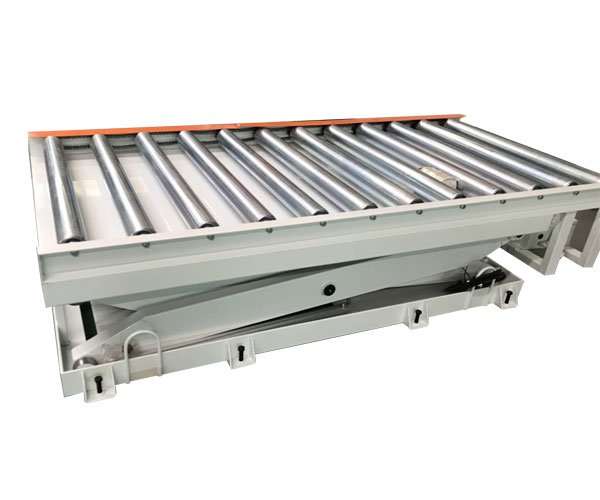
Accessories: Gravity rollers, powered conveyors, safety gates, and deck tilting mechanisms.
The following table outlines how these features address specific operational challenges:
Table 2: Custom Features and Their Operational Impact
| Customization Feature | Technical Description | Solves This Pain Point |
|---|---|---|
| Integrated Conveyor Top | A belt or roller conveyor embedded flush with the platform. | Eliminates manual transfer of items on/off the lift, creating a continuous production line. |
| Mobile Configuration | Equipped with heavy-duty casters and a tow bar. | Provides flexibility in multi-use facilities where the lift needs to service multiple stations. |
| Low-Profile "Pit-Type" Design | Ultra-low lowered height achieved through a recessed base. | Solves low-clearance loading issues, allowing easy roll-on of heavy carts or equipment from floor level. |
| Explosion-Proof Package | Motor, controls, and wiring housed in explosion-proof enclosures. | Enables safe operation in environments with flammable dust or vapors, a non-negotiable safety requirement. |
Where Can You Find Answers to Your Most Pressing Questions About the Scissor Type Hydraulic Lifting Table Series
Before making an investment, thorough due diligence is key. Here are three of the most common FAQs I’ve encountered regarding the Scissor Type Hydraulic Lifting Table Series, answered in detail.
What is the typical maintenance required for a Scissor Type Hydraulic Lifting Table Series
Regular maintenance is straightforward but crucial. It primarily involves periodic inspection of hydraulic fluid levels and condition, checking for leaks at connection points, and ensuring all safety devices and limit switches function correctly. The mechanical scissor arms and pivot points should be lubricated as per the FORTRAN maintenance schedule. With proper care, these tables are built for years of reliable service with minimal downtime.
How do I determine the right lift height and capacity for my application
Always plan for both your current and foreseeable future needs. For capacity, calculate the weight of your heaviest typical load, then add a 20-25% safety margin. For lift height, determine the optimal working height for your tallest operator or process, and equally important, the lowered height required for the easiest and safest loading process. The FORTRAN team can provide invaluable consultation here, often suggesting a slightly higher specification to future-proof your investment.
Can a Scissor Type Hydraulic Lifting Table Series be used outdoors or in harsh environments
Yes, but specification is critical. For outdoor or washdown environments, you must specify models with corrosion-resistant treatments (like powder-coated or galvanized finishes), sealed bearings, and hydraulic cylinders with advanced wiper seals. Industrial-grade motors and controls with higher ingress protection (IP) ratings are also essential. FORTRAN offers ruggedized series specifically designed to withstand moisture, temperature variations, and corrosive agents.
The journey to a safer, more efficient, and more ergonomic workspace is defined by the tools you choose. The FORTRAN Scissor Type Hydraulic Lifting Table Series represents more than just a product line; it embodies a commitment to solving the fundamental challenges that hamper productivity and compromise safety. From its robust scissor mechanism and reliable hydraulic power to its wide array of customizable features, this series is engineered to deliver tangible returns on your investment. Don’t let manual handling limitations dictate your operation's pace and potential.
Contact us today. Our specialists are ready to discuss your specific challenges, provide detailed specifications, and help you configure the perfect Scissor Type Hydraulic Lifting Table Series solution for your facility. Reach out for a consultation, a quote, or to schedule a live demonstration. Let's elevate your operational standards together.