
- English
- Español
- Português
- русский
- Français
- 日本語
- Deutsch
- tiếng Việt
- Italiano
- Nederlands
- ภาษาไทย
- Polski
- 한국어
- Svenska
- magyar
- Malay
- বাংলা ভাষার
- Dansk
- Suomi
- हिन्दी
- Pilipino
- Türkçe
- Gaeilge
- العربية
- Indonesia
- Norsk
- تمل
- český
- ελληνικά
- український
- Javanese
- فارسی
- தமிழ்
- తెలుగు
- नेपाली
- Burmese
- български
- ລາວ
- Latine
- Қазақша
- Euskal
- Azərbaycan
- Slovenský jazyk
- Македонски
- Lietuvos
- Eesti Keel
- Română
- Slovenski
- मराठी
- Srpski језик

How Can Intelligent Factory Furniture Production Line Series Solve Real Production Bottlenecks for Modern Furniture Manufacturers?
Article Summary
Furniture production becomes difficult the moment a factory starts facing the same problems every day: too much manual handling, too many process interruptions, too much dependency on skilled operators, and too much waste caused by waiting, misrouting, scratches, rework, or poor coordination between machines. An Intelligent Factory Furniture Production Line Series is designed to connect material flow, machine rhythm, and production decisions into one practical system instead of leaving every process isolated.
In this article, I explain where most furniture factories lose time and money, what a connected production line actually changes, how it helps edge banding, drilling, transfer, buffering, sorting, loading, unloading, and return flow, and why a supplier such as Guangdong Fortran Machinery Co.,ltd. matters when a manufacturer wants a production solution that fits real factory conditions rather than a generic brochure promise.
Table of Contents
- Outline
- What problems are furniture manufacturers really trying to fix?
- What does an Intelligent Factory Furniture Production Line Series actually include?
- Why does a connected line outperform isolated machines?
- Which factory issues improve first after line integration?
- What should buyers look for before choosing a line supplier?
- How should a factory introduce automation without creating new chaos?
- FAQ
- Final Thoughts
Outline
- Identify the daily production bottlenecks that hurt quality, cost, and delivery.
- Clarify what an Intelligent Factory Furniture Production Line Series is in practical factory terms.
- Show how connected loading, transfer, buffering, edge banding, drilling, and return systems reduce waste.
- Compare old manual flow with coordinated intelligent production flow.
- Explain what buyers should verify before investing.
- Answer common questions from factory owners, production managers, and project teams.
What problems are furniture manufacturers really trying to fix?
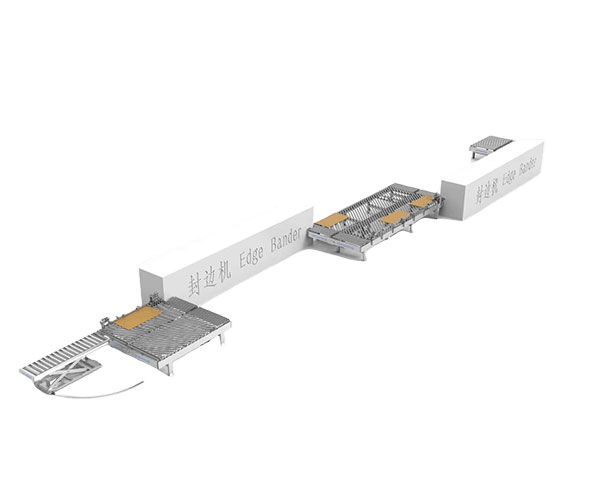
Most furniture factories do not struggle because they lack effort. They struggle because their process flow is fragmented. Boards move, but not smoothly. Machines run, but not in rhythm. Workers stay busy, but that does not always translate into stable output. The result is a factory that looks active while quietly losing capacity all day long.
I often see the same pain points repeat across panel furniture and customized furniture production:
- Too many workers are needed just to move, turn, buffer, sort, and return boards.
- Machine efficiency drops because one station waits for another.
- Panels are scratched, misplaced, stacked incorrectly, or delayed between steps.
- Output planning exists on paper, but the actual shop floor runs on human guesswork.
- Factories buy good machines, yet total line performance remains disappointing.
- Rush orders and customization increase complexity faster than labor can adapt.
- Management cannot see bottlenecks in real time, so problems are discovered too late.
These issues are not minor. They affect delivery dates, labor cost, training burden, product consistency, and customer trust. Once product variety increases and order batches become smaller, manual coordination starts failing even faster. That is exactly why more manufacturers are moving toward an Intelligent Factory Furniture Production Line Series instead of adding disconnected equipment one machine at a time.
What does an Intelligent Factory Furniture Production Line Series actually include?
This phrase sounds grand, which is always a little suspicious in manufacturing because people love dramatic labels for ordinary equipment. In real terms, an Intelligent Factory Furniture Production Line Series is a coordinated system that connects equipment, product movement, process timing, and control logic so boards can move from one stage to the next with less manual intervention and fewer avoidable disruptions.
Depending on the production target, the line may include:
- Automatic loading systems for incoming panels
- Transfer conveyors and roller systems
- Buffering and accumulation sections
- Connection lines for edge banding machines
- Automatic return lines for single-operator or reduced-operator flow
- Loading and unloading units for CNC drilling or multi-drilling processes
- Sorting, routing, and workstation coordination systems
- Control systems that manage line linkage and production status
The real advantage is not any single component. It is the way each component supports the next one. A drilling machine alone may be fast. An edge bander alone may be precise. A conveyor alone may be reliable. But once these pieces work as a synchronized line, the factory gains something much more valuable: continuity.
Continuity is where factories recover hidden capacity. Not from magic. Not from slogans. Just from fewer stops, fewer touches, fewer mistakes, and fewer moments where material waits for people to decide what should happen next.
Why does a connected line outperform isolated machines?
A furniture factory does not make money by owning machines. It makes money by keeping production moving at a stable pace with acceptable quality and predictable labor use. Isolated machines create islands. Islands create waiting. Waiting creates cost.
A connected production line changes the operating logic in several important ways:
- It reduces non-productive handling. Workers spend less time lifting, rotating, carrying, and repositioning materials.
- It protects process rhythm. One machine does not need to stop simply because downstream transfer is disorganized.
- It lowers error frequency. Repeated manual routing creates avoidable mistakes, especially in high-mix production.
- It improves utilization. Equipment works closer to its intended pace when flow interruptions decrease.
- It supports labor optimization. Fewer operators can manage more stable output with the right line design.
- It makes expansion easier. Once flow logic is standardized, future upgrades become more manageable.
This is especially important for manufacturers dealing with custom furniture, cabinet panels, wardrobe systems, or order structures that shift every day. Manual production may appear flexible at first, but it becomes fragile under complexity. An Intelligent Factory Furniture Production Line Series gives flexibility structure, which is a much more useful thing than chaos pretending to be agility.
Which factory issues improve first after line integration?
The first improvements are usually not abstract. They are visible on the floor within normal production: fewer idle moments, fewer board pileups, fewer operators tied to repetitive transfer tasks, and clearer coordination between processing stages.
| Factory Problem | Common Manual Situation | What a Connected Line Improves |
|---|---|---|
| Labor pressure | Too many people assigned to moving and returning panels | Automatic transfer and return sections reduce dependency on repetitive handling labor |
| Machine waiting time | Equipment pauses because panels are not delivered or removed on time | Linked flow keeps upstream and downstream processes better synchronized |
| Board damage | Manual movement increases scratches, drops, and inconsistent stacking | Controlled conveying and routing reduce unnecessary contact and mishandling |
| Process confusion | Operators make routing decisions under pressure | Structured line logic gives clearer movement paths and station responsibilities |
| Output instability | Daily production depends too heavily on operator skill and pace | Automation stabilizes flow and supports repeatable performance |
| Expansion difficulty | New equipment is added without solving flow bottlenecks | Integrated design makes future scaling more practical |
This is why buyers should not judge an automation project only by the number of machines installed. The better question is whether production flow becomes simpler, cleaner, and easier to control. If the answer is yes, the project is moving in the right direction.
What should buyers look for before choosing a line supplier?
Selecting an Intelligent Factory Furniture Production Line Series is not just about price or the most impressive demo video. Buyers need to think about compatibility, workflow fit, maintenance practicality, and how the line will behave in their actual production environment. That means asking better questions before making a commitment.
Here is what I would verify first:
- Product fit: Is the line suitable for the factory’s board type, product mix, and order pattern?
- Machine compatibility: Can it connect smoothly with major host machines already in use or planned for purchase?
- Scalability: Can the solution grow from semi-automatic support to broader automation later?
- Control visibility: Can managers understand status, flow, and bottlenecks quickly?
- Maintenance access: Are core parts easy to inspect, service, and replace?
- Line logic: Does the proposal solve the factory’s real bottlenecks, not just fill floor space with equipment?
- Supplier understanding: Does the supplier speak in factory terms or only in sales language?
This is where an experienced manufacturer becomes more valuable than a generic equipment trader. Guangdong Fortran Machinery Co.,ltd. is known in this field because buyers are not simply asking for conveyors. They are asking for an answer to production imbalance. That requires a solution mindset, especially when edge banding, drilling, returning, and transfer sections must work together rather than compete with one another.
A good supplier should be able to discuss your labor structure, machine layout, bottleneck stations, line direction, and future expansion path. If they cannot do that, they are probably selling parts, not solving production problems.
How should a factory introduce automation without creating new chaos?
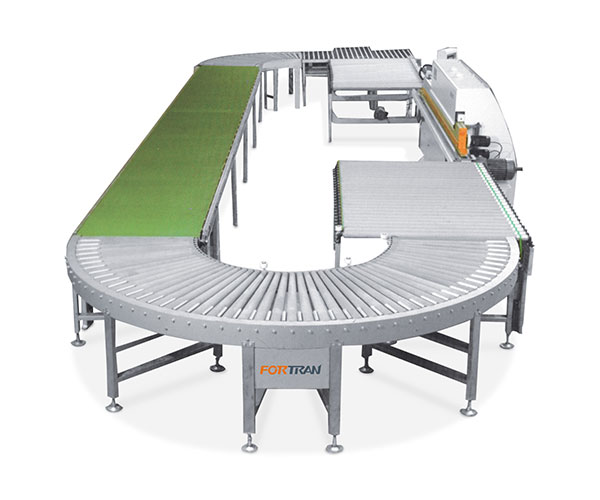
Many factory owners worry about one thing more than cost: disruption. That concern is reasonable. A badly planned automation project can interrupt production, confuse operators, and create new bottlenecks in the name of solving old ones. The smarter path is phased implementation with a clear objective at each step.
A practical rollout often follows this logic:
- Start with the process that creates the most repetitive handling burden.
- Stabilize transfer and return flow around the bottleneck machine.
- Add loading and unloading assistance where operator dependency is highest.
- Connect adjacent processes once flow becomes predictable.
- Use control visibility to refine rhythm, not just to collect data nobody acts on.
This step-by-step approach helps factories reduce risk while building confidence. It also makes internal training easier because operators see clear improvements instead of being forced into a sudden all-at-once system change.
In other words, the best automation project is not the one that looks the biggest on a layout drawing. It is the one that the factory can actually absorb, use, and improve over time.
Why this matters for long-term competitiveness
When orders become more fragmented and customer expectations rise, factories need more than machine horsepower. They need reliable flow. An Intelligent Factory Furniture Production Line Series helps turn unstable manual coordination into repeatable factory logic. That means better throughput, better consistency, and less dependence on daily improvisation.
FAQ
Is an Intelligent Factory Furniture Production Line Series only for very large factories?
No. Large factories often invest first, but smaller and medium-sized manufacturers can also benefit, especially if they face labor shortages, unstable delivery performance, or high handling intensity. The right configuration depends on production flow, not just factory size.
What is the biggest immediate benefit after installation?
In many cases, the first noticeable benefit is smoother material flow. Once transfer, return, loading, and unloading become more coordinated, machine stoppages and manual handling pressure usually decline quickly.
Can a factory begin with semi-automatic support instead of full automation?
Yes. That is often the more practical route. A phased approach lets the factory solve the most expensive bottlenecks first while keeping current production running.
Why is line coordination more important than buying one high-performance machine?
Because a fast machine still loses value if material cannot arrive, leave, or be routed correctly. Factory performance depends on system flow, not isolated machine speed alone.
How can buyers judge whether a supplier truly understands furniture production?
Ask detailed questions about line layout, process linkage, bottleneck diagnosis, and compatibility with existing equipment. A capable supplier should discuss production logic clearly rather than hide behind vague promises.
Final Thoughts
The decision to invest in an Intelligent Factory Furniture Production Line Series is really a decision about how you want your factory to run in the future. Do you want growth to depend on adding more people to repetitive tasks, or do you want growth to come from cleaner flow, better coordination, and more stable output?
For furniture manufacturers dealing with rising labor pressure, customization complexity, and tighter delivery expectations, a connected production line is no longer a decorative upgrade. It is a practical way to remove friction from the factory floor and build a stronger production foundation.
If you are evaluating transfer systems, loading and unloading solutions, return lines, edge banding connections, or a broader Intelligent Factory Furniture Production Line Series, Guangdong Fortran Machinery Co.,ltd. can help you assess what fits your production reality and what does not. Contact us to discuss your factory layout, current bottlenecks, and the line solution that can move your production from labor-heavy complexity to controlled, efficient flow.